Feneruium

2021

Reducing friction in a high-traffic fan store

Fenerium’s strong brand presence wasn’t reflected in its digital experience. Complex navigation and mobile friction slowed product discovery and checkout. This redesign focused on simplifying structure and reducing shopping friction.

Fenerium’s strong brand presence wasn’t reflected in its digital experience. Complex navigation and mobile friction slowed product discovery and checkout. This redesign focused on simplifying structure and reducing shopping friction.

Role

Product Designer

Team

1x Product Manager

4x Engineers

2x Junior Designer

Impact

Faster financial decisions for small businesses

Helped product team validate product-market fit

Actionable dashboard improved client retention

Fewer support tickets after launch

Role

Product Designer

Team

1x Product Manager

4x Engineers

2x Junior Designer

Impact

Faster financial decisions for small businesses

Helped product team validate product-market fit

Actionable dashboard improved client retention

Fewer support tickets after launch

Role

Product Designer

Team

1x Product Manager

4x Engineers

2x Junior Designer

Impact

Faster financial decisions for small businesses

Helped product team validate product-market fit

Actionable dashboard improved client retention

Fewer support tickets after launch

Problem area

High traffic, low clarity

Despite strong brand engagement, the platform’s structure was fragmented.
Repeated categories, deep navigation layers, and inefficient filtering increased cognitive load, especially on mobile.

Research & Insight

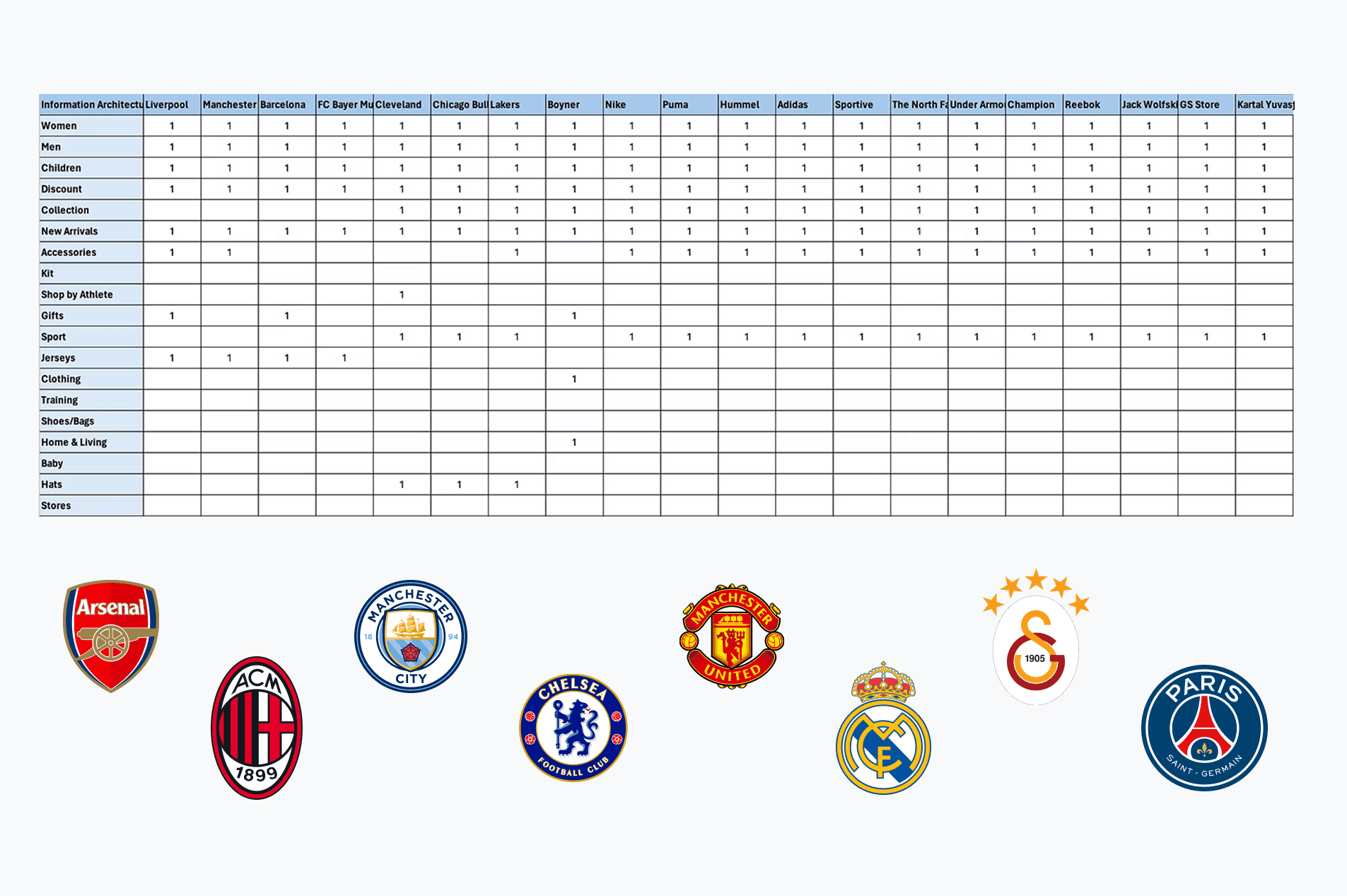
To understand where friction occurred, I analysed SEO drop-off data and reviewed user navigation patterns across key journeys. I also benchmarked 20 global e-commerce platforms to identify best practices in category structure, filtering behaviour, and mobile interaction.
Insight 01

Benchmarking 20 global football e-commerce platforms revealed a clear pattern: category structures were flat, consistent, and predictable. In comparison, Fenerium’s repeated and layered categories introduced unnecessary complexity.

Insight 01

Benchmarking 20 global football e-commerce platforms revealed a clear pattern: category structures were flat, consistent, and predictable. In comparison, Fenerium’s repeated and layered categories introduced unnecessary complexity.

Insight 01

Benchmarking 20 global football e-commerce platforms revealed a clear pattern: category structures were flat, consistent, and predictable. In comparison, Fenerium’s repeated and layered categories introduced unnecessary complexity.

Insight 02

Core shopping journeys across competitors prioritised direct access to product groups (Women, Men, Kids, New Arrivals), while Fenerium’s structure required additional navigation steps.

Insight 02

Core shopping journeys across competitors prioritised direct access to product groups (Women, Men, Kids, New Arrivals), while Fenerium’s structure required additional navigation steps.

Insight 02

Core shopping journeys across competitors prioritised direct access to product groups (Women, Men, Kids, New Arrivals), while Fenerium’s structure required additional navigation steps.

Design goals

What I aimed to achieve

Simplify structure

Flatten category depth and remove repetition to create a clearer browsing system.

Simplify structure

Flatten category depth and remove repetition to create a clearer browsing system.

Simplify structure

Flatten category depth and remove repetition to create a clearer browsing system.

Improve mobile usability

Optimise filtering and navigation patterns for faster, thumb-friendly interaction.

Improve mobile usability

Optimise filtering and navigation patterns for faster, thumb-friendly interaction.

Improve mobile usability

Optimise filtering and navigation patterns for faster, thumb-friendly interaction.

Accelerate product discovery

Reduce unnecessary steps between landing and product pages to shorten the path to purchase.

Accelerate product discovery

Reduce unnecessary steps between landing and product pages to shorten the path to purchase.

Accelerate product discovery

Reduce unnecessary steps between landing and product pages to shorten the path to purchase.

Design decision 01

Flattening the information architecture

Benchmark analysis showed that leading football e-commerce platforms rely on flat, predictable category structures. Instead of adding new promotional layers, I reduced category depth and removed repetition. Core groups such as Women, Men, Kids, and New Arrivals became the primary navigation anchors. This shift prioritised clarity over density, making browsing faster and more intuitive.

What We Designed For

Product discovery efficiency

Reduce navigation depth and shorten the path from landing to product pages.

Product discovery efficiency

Reduce navigation depth and shorten the path from landing to product pages.

Product discovery efficiency

Reduce navigation depth and shorten the path from landing to product pages.

Filter engagement

Make filtering more accessible and intuitive on mobile and desktop.

Filter engagement

Make filtering more accessible and intuitive on mobile and desktop.

Filter engagement

Make filtering more accessible and intuitive on mobile and desktop.

'Add to cart' clarity

Support purchase intent through clearer product grouping and hierarchy.

'Add to cart' clarity

Support purchase intent through clearer product grouping and hierarchy.

'Add to cart' clarity

Support purchase intent through clearer product grouping and hierarchy.

Checkout flow smoothness

Minimise friction between product selection and final purchase.

Checkout flow smoothness

Minimise friction between product selection and final purchase.

Checkout flow smoothness

Minimise friction between product selection and final purchase.

Design decision 02

Redesigning mobile navigation for speed

Refining navigation across devices

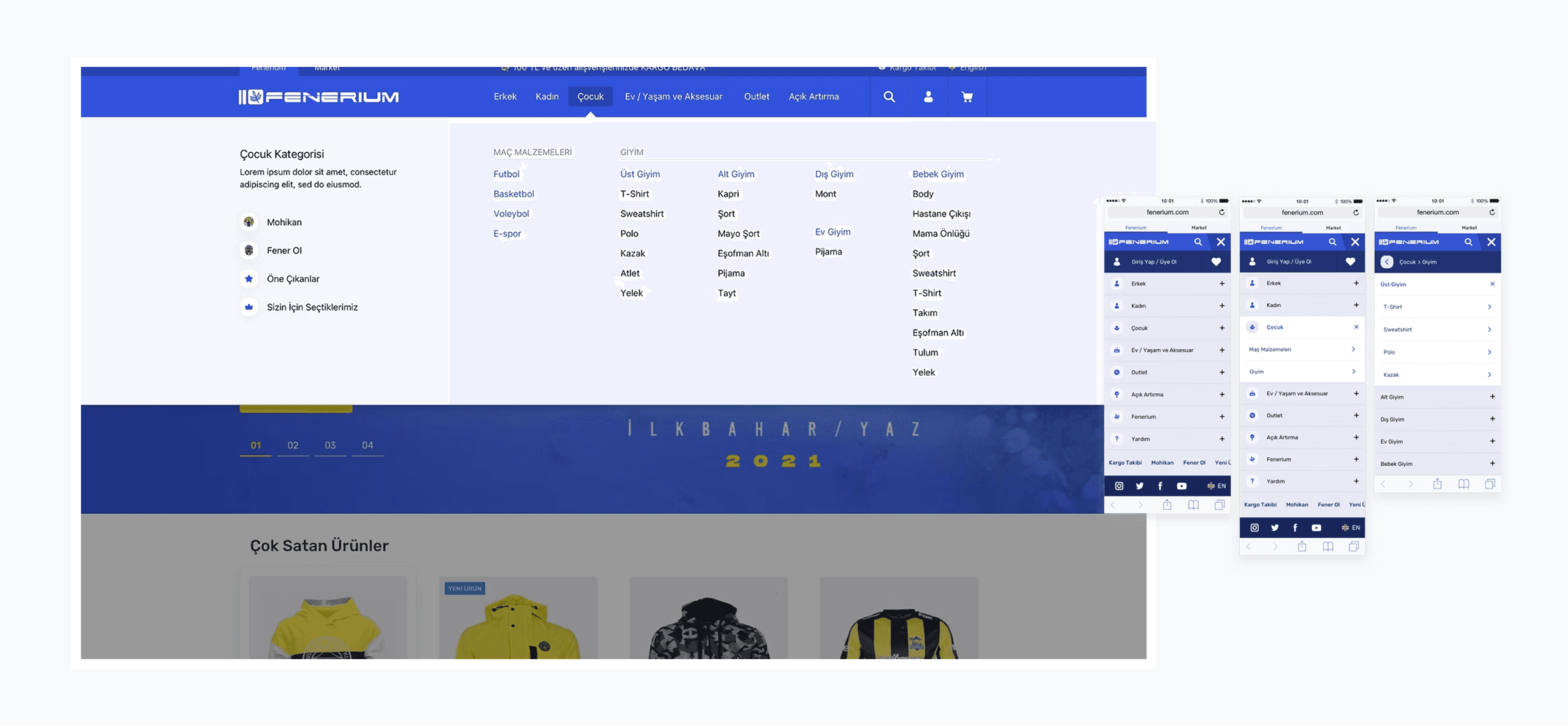
Mobile users represented a significant portion of traffic, yet filtering and navigation required multiple steps to access products. Instead of adding more visible controls, I simplified interaction patterns. The menu structure was clarified, filtering was made more accessible, and key actions were repositioned within thumb reach. The goal was to reduce friction without increasing visual density.

While the information architecture was simplified at a structural level, navigation patterns still needed refinement across desktop and mobile. On desktop, I reorganised the mega menu to reduce visual density and group related categories more clearly. On mobile, filtering and key actions were repositioned to minimise friction and improve one-handed usability. The aim was to create a consistent experience across devices, balancing clarity with speed.

1. Simplified menu structure

Reduced category depth and grouped related items more clearly.

1. Simplified menu structure

Reduced category depth and grouped related items more clearly.

1. Simplified menu structure

Reduced category depth and grouped related items more clearly.

2. Accessible filtering

Introduced a cleaner filter layout with fewer scroll steps.

2. Accessible filtering

Introduced a cleaner filter layout with fewer scroll steps.

2. Accessible filtering

Introduced a cleaner filter layout with fewer scroll steps.

3. Thumb-friendly interactions

Repositioned key actions to improve one handed usability

3. Thumb-friendly interactions

Repositioned key actions to improve one handed usability

3. Thumb-friendly interactions

Repositioned key actions to improve one handed usability

Design decision 03

Enhancing product interaction at card level

Once navigation was simplified, the next friction point was interaction at product level. Product cards previously functioned as static previews. I introduced clearer hierarchy and interactive states, allowing users to add items to favourites, view details quickly, or move directly to cart. This reduced unnecessary page transitions and supported faster decision-making within listing pages.

What We Designed For

Interaction efficiency

Bring quick view, favourites, and add-to-cart actions closer to the browsing surface.

Interaction efficiency

Bring quick view, favourites, and add-to-cart actions closer to the browsing surface.

Interaction efficiency

Bring quick view, favourites, and add-to-cart actions closer to the browsing surface.

Conversion acceleration

Shorten the path between product consideration and purchase.

Conversion acceleration

Shorten the path between product consideration and purchase.

Conversion acceleration

Shorten the path between product consideration and purchase.

Impact

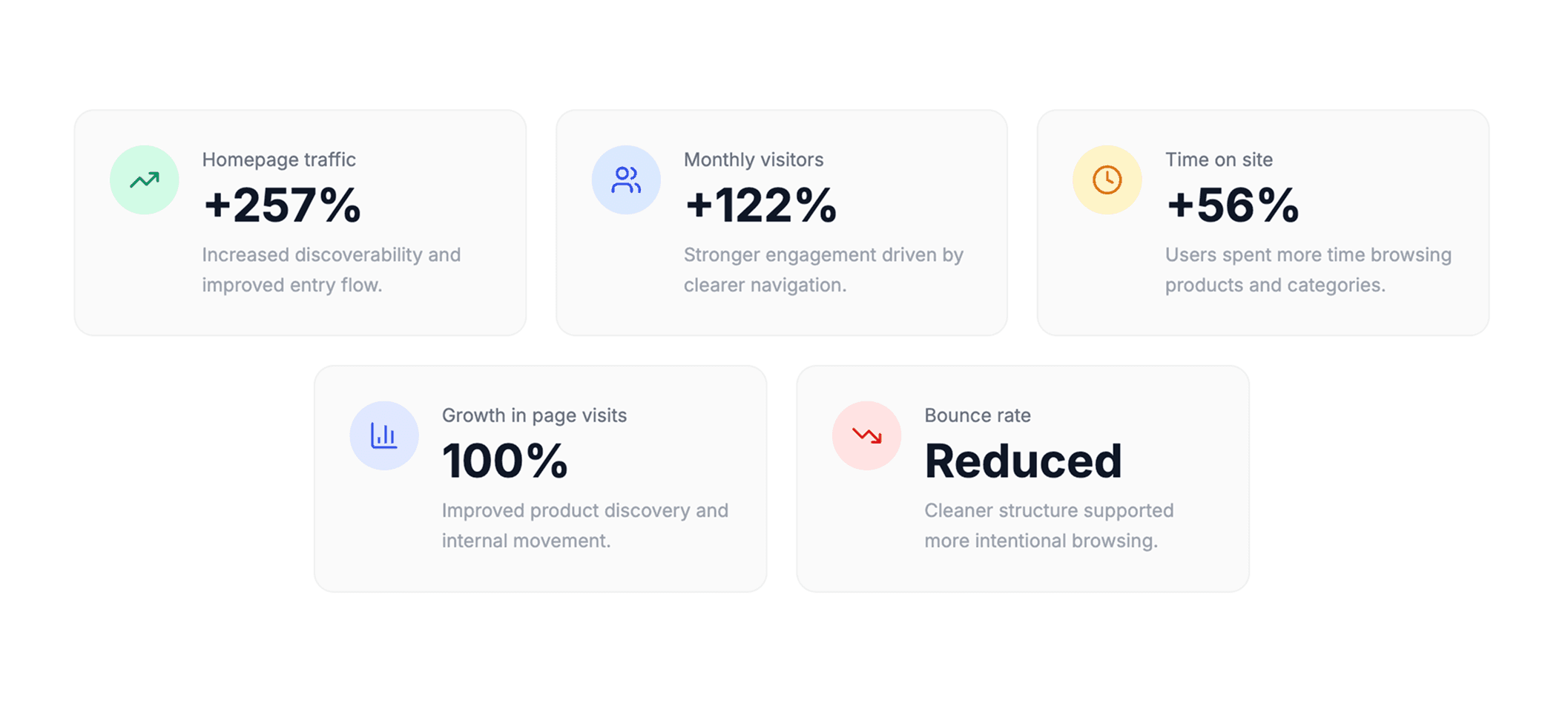
Platform growth after launch

Following the structural and navigation redesign, the platform saw measurable growth across engagement metrics.