TallyMoney
2025
Restructuring a Gold-Backed Financial System for Clarity and Control
TallyMoney enables users to hold and spend their savings in physical gold instead of fiat currency. However, fluctuating market value, multiple performance indicators and regulatory identity verification requirements created cognitive overload across onboarding and dashboard experiences.
The product did not need more features. It needed structure.
How improving the full transfer flow cut support tickets by 42%
Instead of fixing single screens, I mapped the entire transfer flow to find where business users got stuck and reached out for help. Most issues happened mid-transfer or right after sending. The goal was to rebuild trust and give business owners back their time by improving the completion rate of payment flows.
Problem area
When financial transparency became cognitive overload
The dashboard aimed to maximise transparency by exposing gold weight, market fluctuations, performance indicators and transaction data at the same time. Instead of empowering users, the interface required interpretation. Financial value felt unstable, and the absence of hierarchy increased decision hesitation.
Over time, this translated into confusion, support dependency and reduced confidence in the product.
When transparency lacked structure
Design decision 01
Making Financial Value Visible and Interpretable
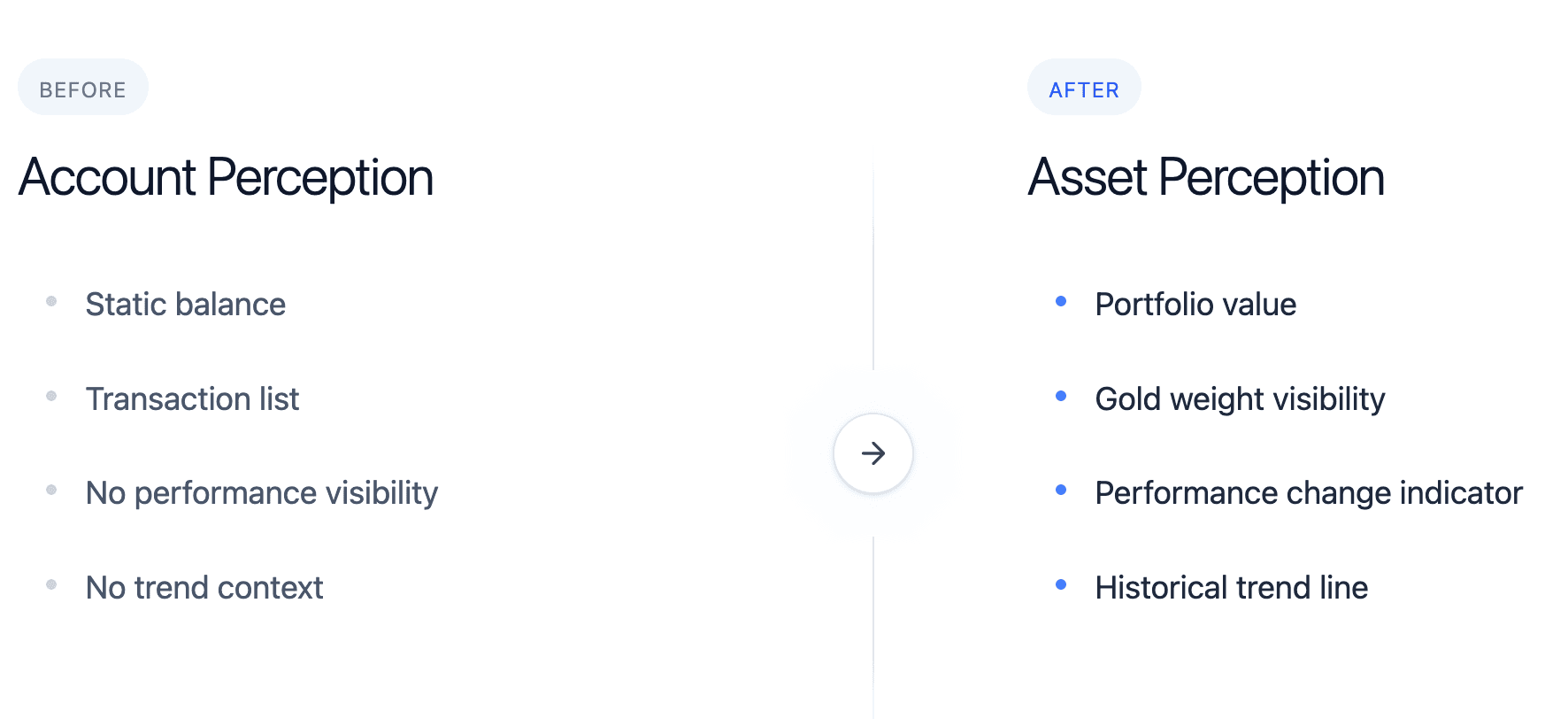
Although TallyMoney functioned as a spending account, it was fundamentally an asset backed investment product. Users were holding gold, not static currency. However, the original dashboard presented the experience like a traditional daily banking app. Portfolio change, performance metrics and value evolution were not clearly surfaced.
As a result, users perceived it as a transactional tool rather than an appreciating asset system.
The redesign aimed to make financial growth visible, not just balance.
Design decision 02
Structuring Financial Information Around User Intent
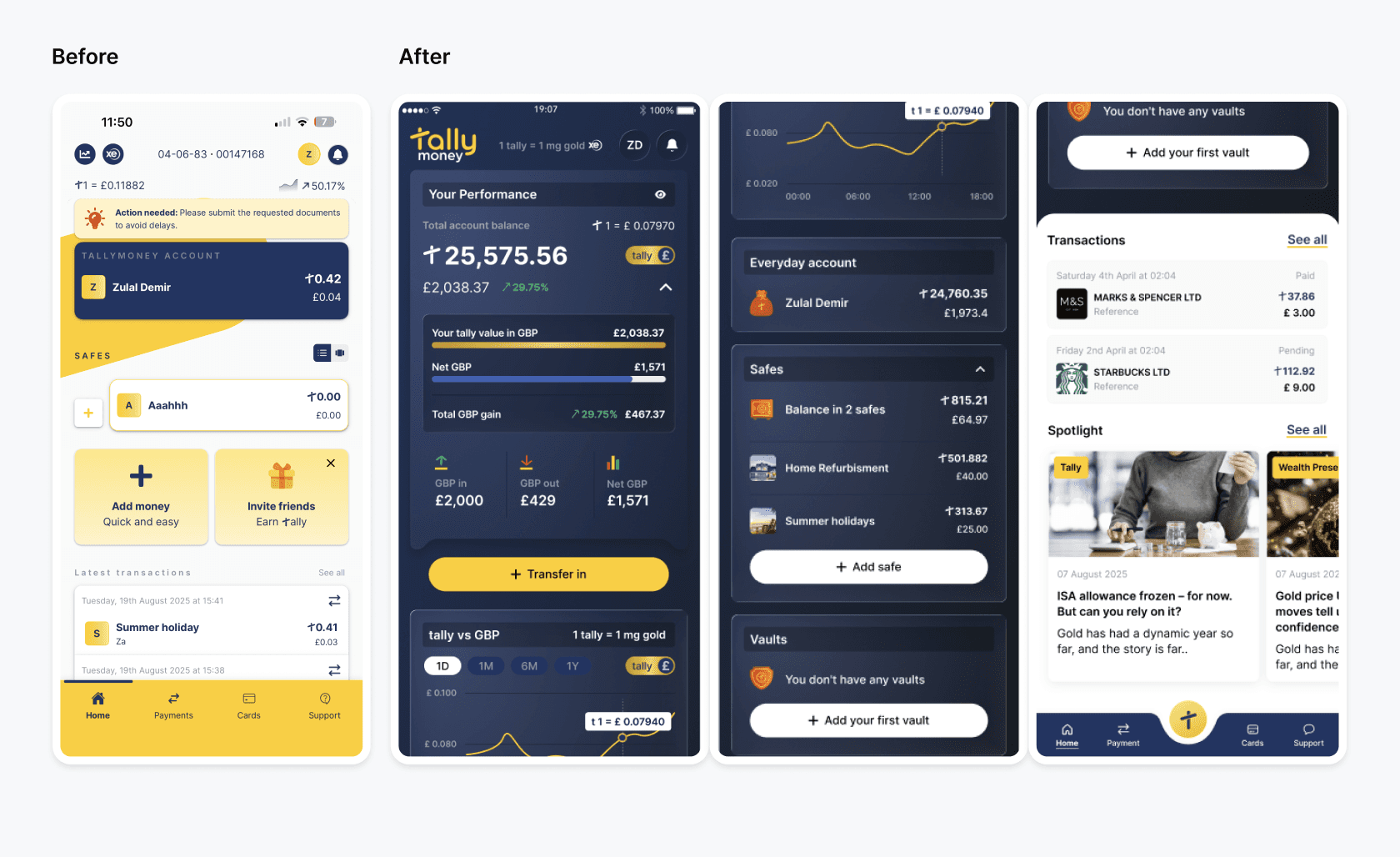
Even after surfacing performance metrics, the dashboard still grouped information based on internal system logic. Accounts, safes, vaults and transactions were structured by product categories rather than by user intent. Users had to interpret what each section meant before understanding what to do.

Design decision 03
Controlling Information Depth Through Progressive Disclosure
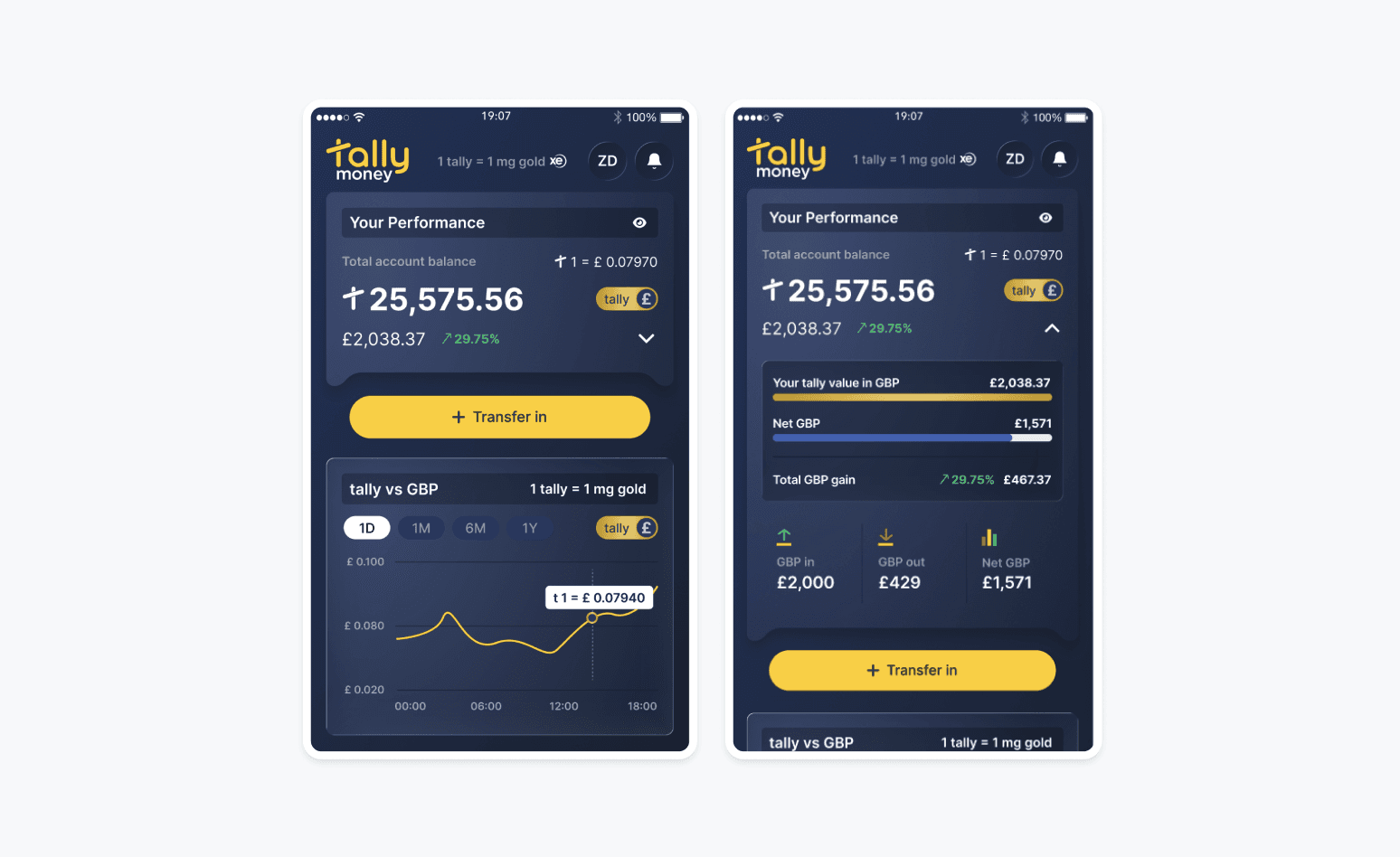
As performance visibility increased, exposing all financial details simultaneously risked overwhelming the interface. Gold value, percentage change, historical performance and transaction breakdowns created layered financial complexity. Collapsible sections were introduced to allow controlled exploration of financial depth.
Retrospective
From Interface Refresh to System Reframing
The redesign shifted TallyMoney from a transactional banking perception to an asset based financial system.
The result was a dashboard that supports visibility, interpretation and action in a volatile financial environment. This project demonstrated that in financial products, clarity is not about reducing information. It is about structuring it.