Opet-Otobilim
2023
Defining the System Architecture
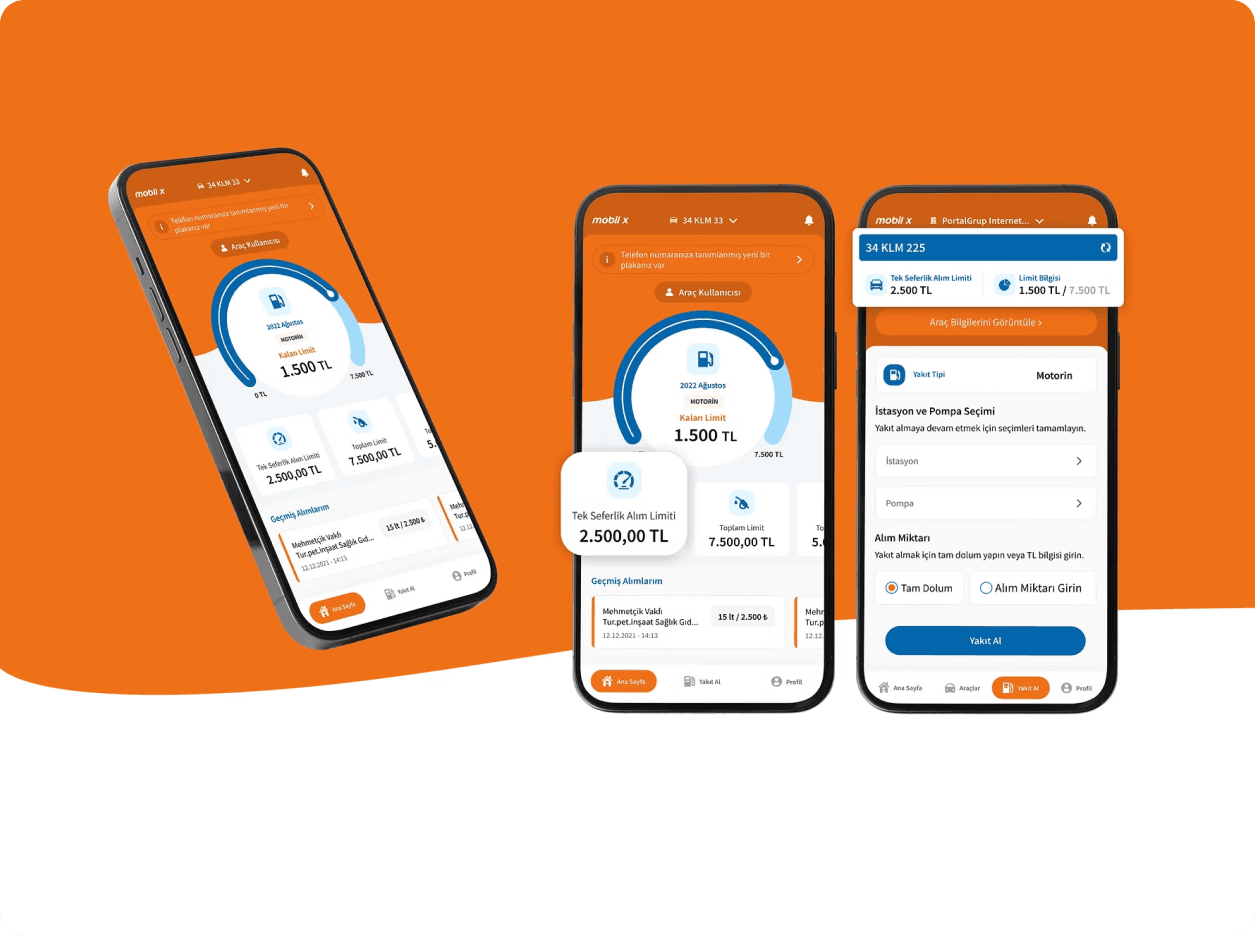
Otobilim was built as a fuel automation and fleet management system for enterprise clients.
The challenge was to define a role-based, decision-oriented architecture that could translate complex operational logic into a clear digital experience.
Highlights
Establishing a Scalable Operational Foundation
When I joined the company, internal reports were built manually: copied and checked across endless spreadsheets. The process was slow, error-prone, and made it hard to trust the numbers. I redesigned the reporting tool to automate validation, add templates, and surface key data. It changed not just the tool but how the company worked with data.
Design goals
What I aimed to achieve
Design decision 01
Structuring a Role-Aware System
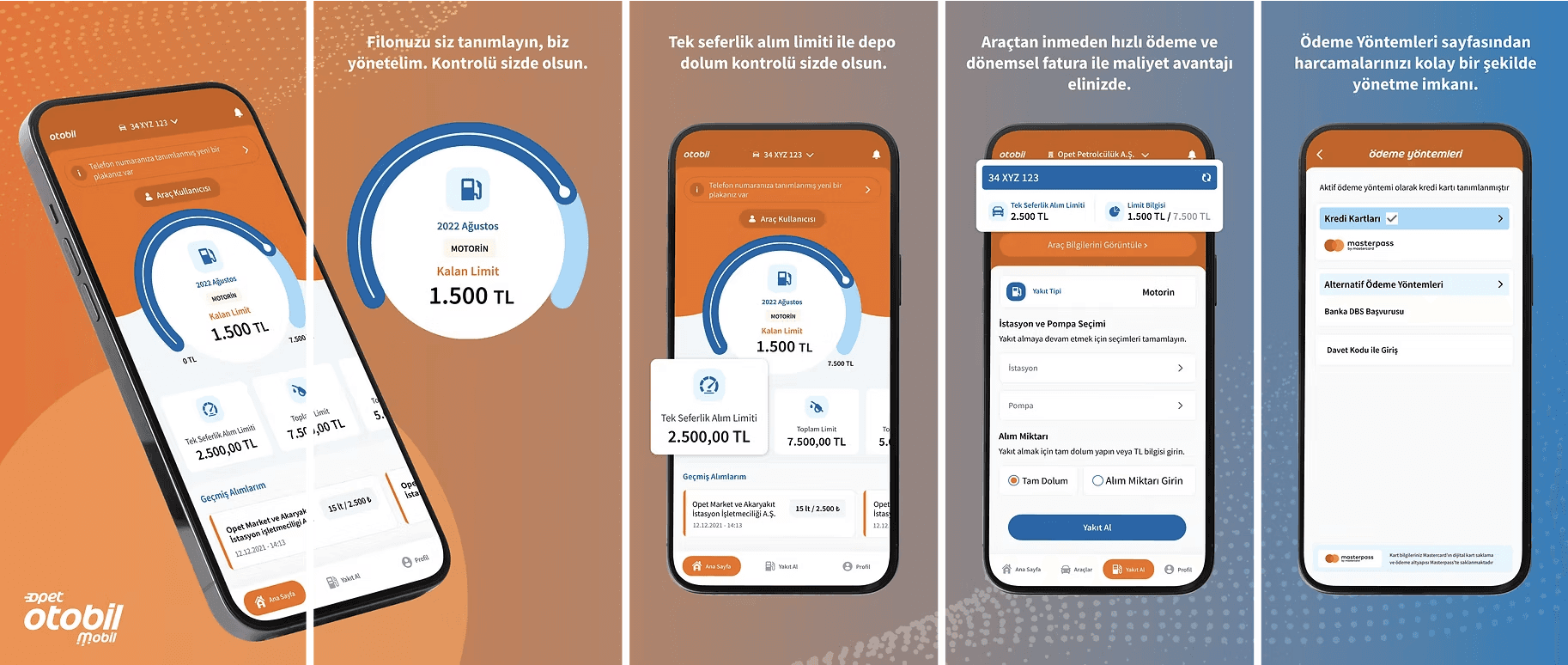
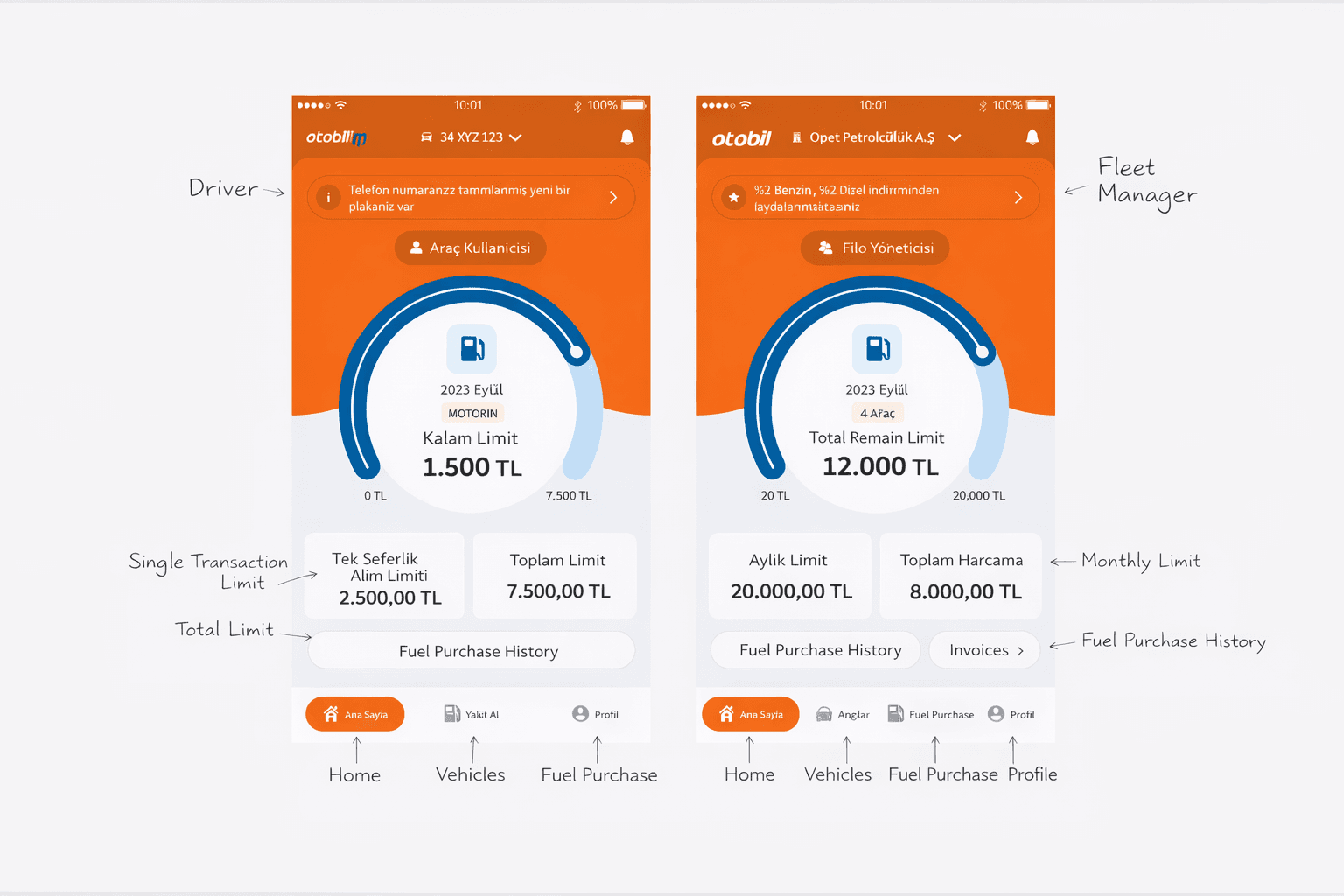
Instead of designing a feature-based interface, the system was structured around behavioural roles.
Drivers interacted with purchase and validation flows, while company owners accessed monitoring and financial control layers.
What We Designed For
Design decision 02
Transforming Data into Actionable Monitoring
Fuel automation generates dense operational data. The dashboard was designed to prioritise key metrics, surface alerts and progressively reveal detailed reports to prevent cognitive overload.
Design decision 03
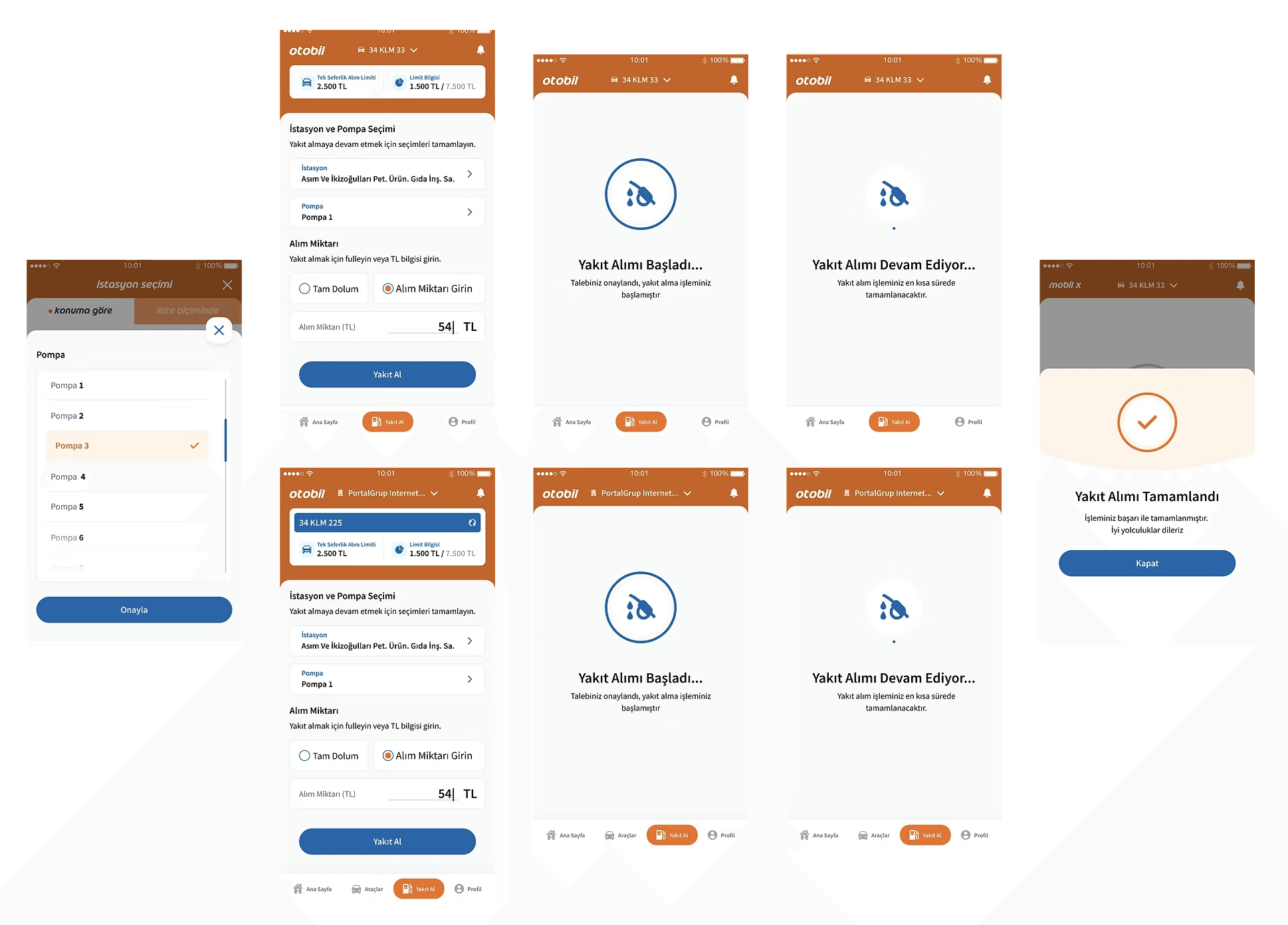
Balancing Speed and Control in the Fuel Purchase Flow
Fuel purchasing is a field action performed under time pressure, yet it carries financial implications for the company. The challenge was to design a flow that enables fast driver execution while maintaining managerial control and validation integrity.
Retrospective
Designing Structure Before Interface
Otobilim reinforced that complex systems cannot be simplified at the visual layer alone.
True clarity emerges from defining behavioural roles, information hierarchy and validation logic before designing screens.
By focusing on structure first, the interface became a natural outcome rather than a cosmetic solution.